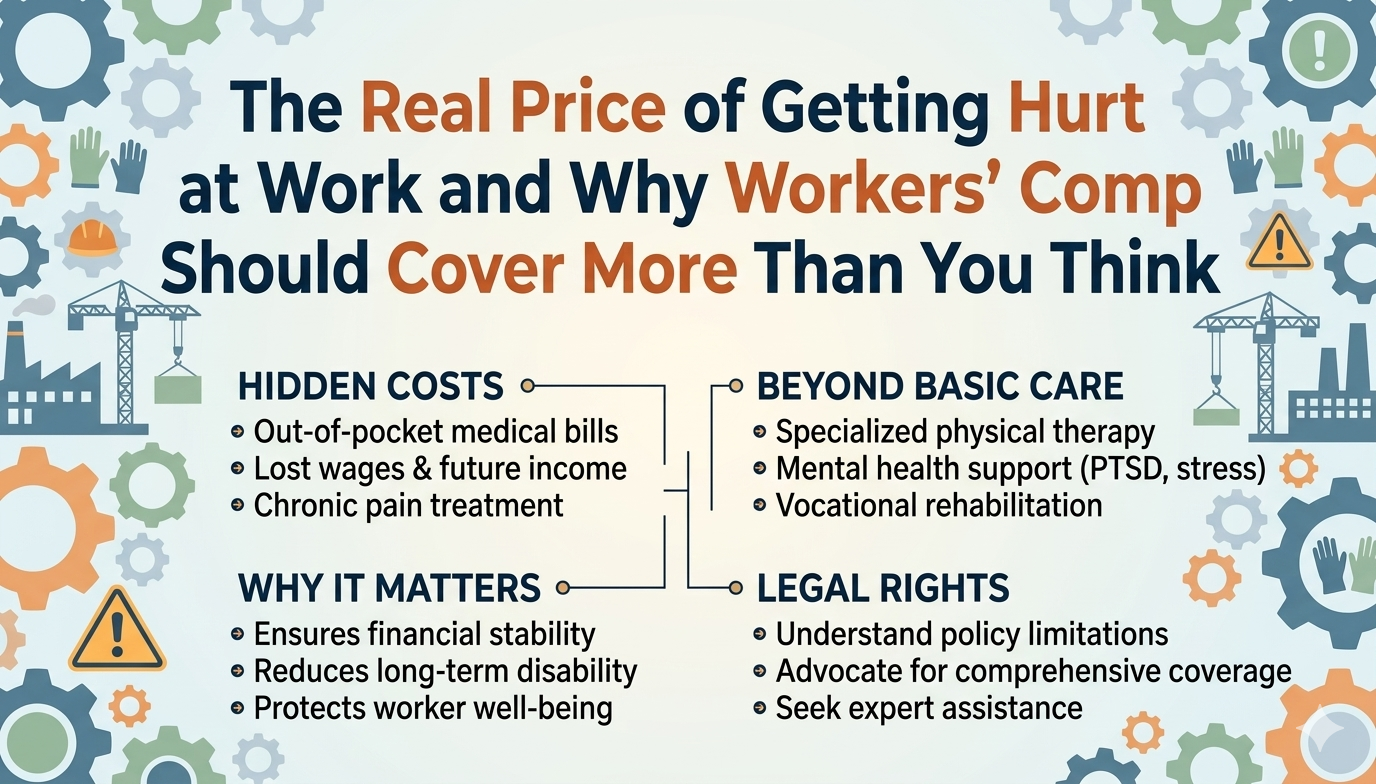
A work injury can change your life in a single moment. One slip, one fall, one bad lift, or one machine accident can leave you dealing with pain, stress, and a long recovery. Most people know workers’ compensation is meant to help with medical care and lost wages, but many do not realize how quickly extra costs can pile up, especially when legal support for disputed cases becomes part of the picture.
These extra costs can hit hard, especially when you are already worried about healing and paying your regular bills. The truth is simple: a work injury is not just about a doctor visit or time away from work. It can affect your gas tank, your grocery budget, your childcare plans, and even your peace of mind. That is why workers’ compensation should cover more out-of-pocket expenses than many people first expect.
The bills start long before the case feels “serious”
Many injured workers think the real financial trouble only begins if they need surgery or months off work. In reality, the money drain often starts right away.
You may have to drive back and forth to appointments, pick up prescriptions, buy medical supplies, or pay for help around the house while you recover. Even a “minor” injury can create a chain of spending that was never part of your normal monthly budget.
Fun fact: A lot of injured workers are surprised to learn that even short trips to urgent care, physical therapy, and follow-up visits can add up to dozens or even hundreds of miles in just a few weeks.
These are not luxury costs. They are part of what it takes to get better and stay on track with treatment.
Transportation costs can quietly become a real burden
Getting medical care is not always easy, especially when you are injured.
If you cannot drive comfortably, you may need a friend or family member to take you. If your doctor is far away, you may spend more on gas, parking, tolls, rideshare trips, or public transportation. In some cases, injured workers even need to stay overnight near a specialist or treatment center.
That money comes out of your pocket first, and for many families, that matters a lot. Missing work is already stressful enough. Adding travel expenses to the mix only makes things harder.
Workers’ compensation should help cover reasonable travel costs tied to approved medical care. That support can make a big difference, especially for workers who need repeated treatment over several months.
Medication and medical supplies are not always “small” expenses
People often assume medicine is cheap because they only think about one prescription at a time. But after a work injury, the list can grow quickly.
You may need pain relief medicine, anti-inflammatory drugs, braces, wraps, bandages, heating pads, ice packs, crutches, compression gear, or other recovery items. Some injuries also require special shoes, supports, or equipment to help you move safely.
Even when each item seems affordable on its own, the total can become a real problem when added to regular household bills.
Fun fact: Something as basic as a back brace or wrist support can become part of daily life during recovery, which means replacing worn-out items may also become part of the cost.
These are not extras. They are tools that help injured workers heal, manage pain, and avoid making the injury worse.
Childcare and household help may become necessary
A work injury does not just affect you at the doctor’s office. It can affect your whole routine at home.
If you have children, recovery may make it harder to lift them, drive them, or care for them alone. If you live by yourself, simple chores can suddenly feel impossible. Laundry, cleaning, cooking, mowing the lawn, or grocery shopping may become difficult or unsafe.
This is where the hidden cost of an injury becomes very real. You may need to pay for childcare, meal help, cleaning help, or other support while you recover. These expenses are easy to overlook at first, but they matter because they are directly connected to the injury’s effect on your daily life.
That is one reason workers compensation lawyers can be so helpful. A good lawyer understands, according to Workers Compensation Lawyers, Los Angeles, CA, that a claim is not just a stack of forms. It is about what the injury is actually costing you in the real world.
Lost time can cost more than lost wages
Most people think of lost income as the main money issue after a work injury. That is important, of course, but there is another layer many people miss.
You may lose time dealing with phone calls, paperwork, prescription pickups, treatment scheduling, and claim questions. If your pay is already reduced, every extra task feels heavier. Your spouse or family members may also lose time from their own jobs while helping you get to appointments or manage day-to-day life.
Time has value, even when it does not show up clearly on a pay stub.
This is one reason it helps to understand your rights early. Workers compensation lawyers often step in not just to argue a case, but to help injured workers avoid getting pushed around, delayed, or unfairly denied. That support can reduce stress and help workers focus on healing.
Delays and denied benefits can make everything worse
An injury is hard enough. Confusion about benefits makes it even harder.
When payments are delayed or treatment is questioned, injured workers sometimes end up covering important costs themselves because they cannot wait. They may pay for medication, travel, or supplies out of pocket just to keep care moving.
That can put families in a bad spot fast.
A strong workers’ compensation system should not leave hurt workers stuck choosing between treatment and rent. It should respond in a way that is fair, practical, and humane. When the process gets complicated, workers compensation lawyers can be a real source of relief. They know how to gather proof, explain what should be covered, and fight for benefits that injured workers may not even realize they can request.
Why every receipt matters more than people think
After a work injury, small details matter.
Keeping receipts, mileage records, prescription notes, and appointment dates can help show the true cost of recovery. Many out-of-pocket expenses are easier to recover when there is a clear record. Without that proof, important costs can be ignored or brushed aside.
Fun fact: Some of the strongest workers’ comp claims are not always the biggest injury cases. They are often the best documented ones.
That does not mean workers should have to turn into accountants while they are in pain. It just means that good records can protect your claim and support a fair outcome.
The true cost of healing should not fall on injured workers
Getting hurt at work can affect far more than your body. It can affect your budget, your family routine, your independence, and your sense of security.
Workers’ compensation should cover more than the obvious headline costs. It should also account for the real out-of-pocket expenses that come with treatment, travel, medication, home support, and recovery. These costs are part of the injury story, and they should be taken seriously.
When the system works well, it helps injured workers feel supported instead of stranded. And when problems come up, workers compensation lawyers can play an important role in making sure people are treated fairly. They help injured workers understand their rights, stand up for what they are owed, and move forward with confidence.
No one plans for a workplace injury. But if it happens, the full cost of getting better should not be left sitting on the worker’s shoulders alone.
About the Author