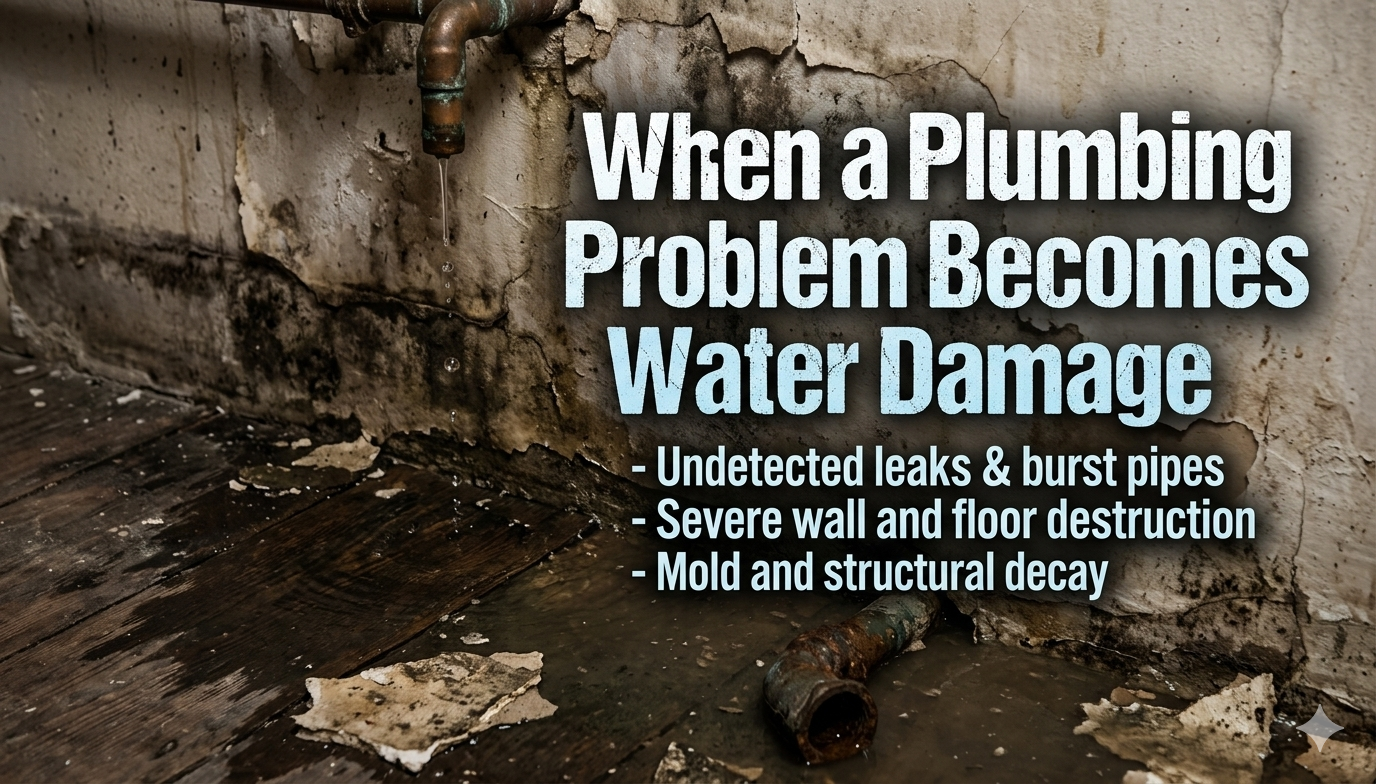
A plumbing problem does not always look serious at first. It might start with a slow drip under the sink, a tiny pipe leak behind a wall, or a toilet that does not seem to be working quite right. The trouble is that water rarely stays in one place. What begins as a plumbing issue can quickly turn into damage to floors, walls, cabinets, and anything else nearby.
That is why it helps to know when the problem has moved beyond a simple repair. Once water starts soaking into your home, the situation changes fast.
It starts small until it suddenly does not
Many plumbing problems seem minor in the beginning, which is one reason people put them off. A little leak may not feel urgent when it is only leaving behind a few drops.
A drip can spread farther than you think
Water has a sneaky way of moving into places you cannot see. It can run behind baseboards, under flooring, into drywall, and around cabinets before you even notice there is a real issue. What looks small on the surface may already be affecting a much larger area.
Hidden moisture is where the trouble grows
Once water gets trapped, it stops being just a plumbing problem. At that point, you are no longer only dealing with a pipe, valve, or drain. You are dealing with moisture sitting inside materials that were never meant to stay wet, which is why water damage cleanup and drying often become part of the next step.
Fun fact: Drywall can start to weaken after being wet for a short time, which is why soft spots often show up sooner than people expect.
The warning signs are often easy to miss
The shift from plumbing issue to water damage is not always dramatic. Sometimes there is no burst pipe or flooded room. Sometimes the signs are quiet and easy to brush off.
Stains and smells tell a story
A yellow mark on the ceiling, peeling paint, or a musty smell can all point to a leak that has been active longer than you think. These are often signs that water has already moved past the original source and into the surrounding area.
Warping is a red flag
Wood floors that start lifting, cabinet panels that swell, or doors that stick for no clear reason can all be clues. Materials change shape when they take on water, and that is often one of the first clear signs that damage is building.
Mold does not wait long
When moisture stays trapped, mold can begin to grow sooner than many people realize. That is when a plumbing repair becomes something bigger, because now the problem may affect both the home and the air inside it.
Some parts of the home get hit first
Not every material reacts the same way when water gets in. Some surfaces can handle a little moisture for a short time. Others start breaking down very quickly.
Drywall and insulation absorb water fast
Walls often take damage before homeowners realize what is happening. Drywall soaks up moisture, and insulation behind it can hold that moisture in place. Even if the wall still looks mostly fine, the inside may already be damp.
Floors can trap moisture underneath
Tile, laminate, hardwood, and carpet can all hide water in different ways. The top may look fine while the bottom stays wet. That is part of what makes water damage tricky. You may not know how bad it is just by looking.
Fun fact: Water can travel along beams, pipes, and other surfaces, which means the wet spot you see is not always directly below the real leak.
Time changes everything
A plumbing problem becomes water damage when water has enough time to spread, soak in, and sit. That is why speed matters so much.
The first few hours matter most
If the leak is caught early, the fix may stay simple. Repair the source, dry the area, and move on, or get urgent help for sewer backups if the problem is more serious from the start. But when water is left alone for hours or days, it has more time to sink into the structure of the home.
Waiting makes the repair bigger
A loose fitting or cracked pipe may be a straightforward plumbing fix. Add soaked drywall, damaged flooring, wet cabinets, or mold growth, and the job becomes much larger. The longer the wait, the more likely it is that repairs will involve both plumbing work and cleanup or restoration work.
The real problem is not always the leak itself
People often focus only on stopping the water, which makes sense. Still, stopping the leak is only one part of the job once damage has begun.
Fixing the source does not dry the home
A plumber may repair the broken pipe, replace the valve, or clear the line, but the moisture left behind still needs attention. Wet materials do not dry well on their own when water has already spread below the surface.
Water damage lingers after the plumbing is fixed
This is where many homeowners get caught off guard. They think the problem is over because the leak has stopped. In reality, the next stage may just be starting. Leftover moisture can lead to stains, odors, swelling, and mold even after the plumbing issue has been handled.
Knowing when to act can save a lot of trouble
Not every small leak turns into a disaster, but it is smart to take water seriously from the start. Fast action can make the difference between a quick fix and a much bigger repair.
Small signs still deserve attention
Do not ignore damp cabinets, soft walls, bubbling paint, or a room that suddenly smells musty. These signs usually mean the problem has already moved past basic plumbing and into damage territory.
Bigger leaks need a bigger response
If water has spread into walls, floors, ceilings, or more than one room, the issue has likely gone beyond plumbing alone. In those cases, it often takes both repair and proper drying to fully deal with the situation.
Fun fact: A tiny pipe crack can release a surprising amount of water over time, especially if it runs all day and all night without being noticed.
A simple leak can change fast
A plumbing problem becomes water damage the moment water starts affecting the materials around it. That is the turning point. It is no longer just about fixing a pipe or stopping a drip. It is about protecting the home itself.
The good news is that early action goes a long way. When you catch the signs quickly, stop the source, and deal with the moisture right away, you have a much better chance of keeping the problem small.
About the Author