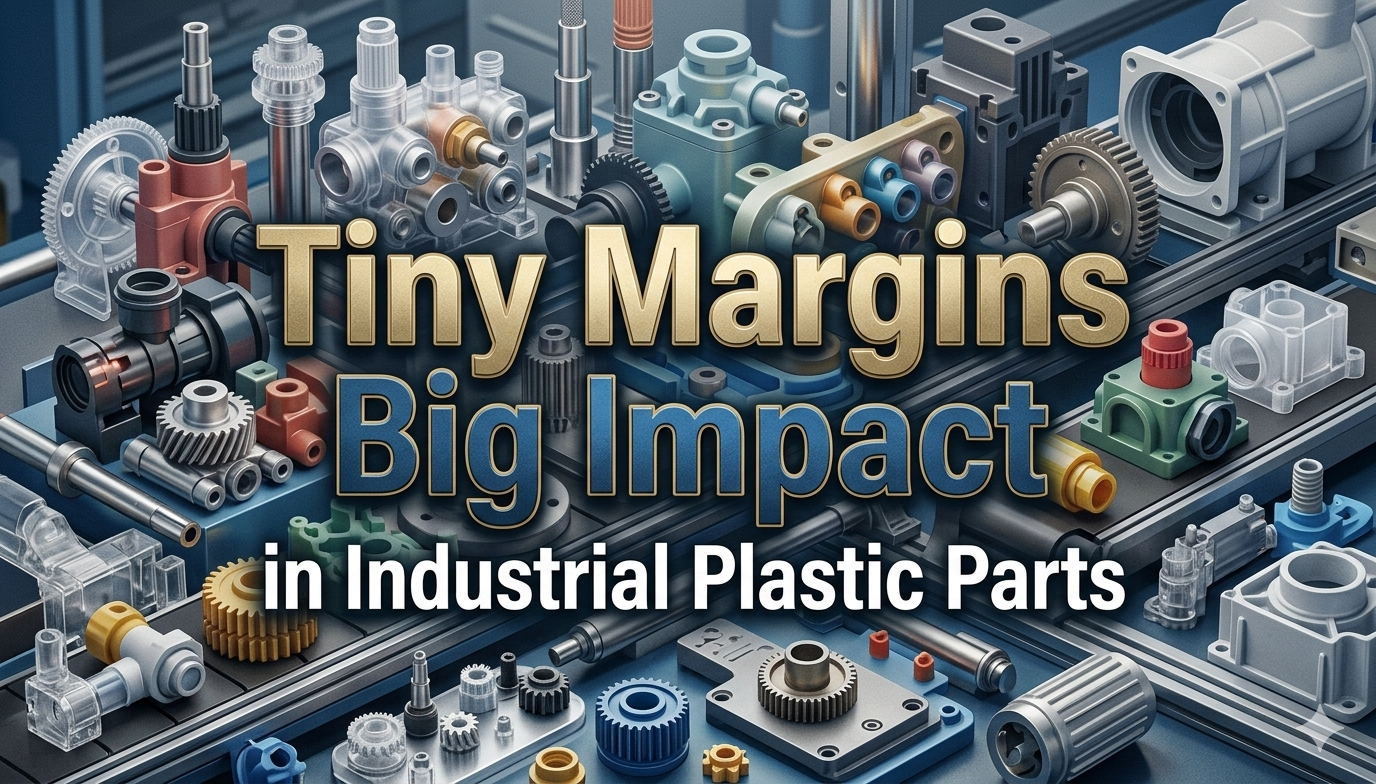
When a plastic part needs to fit just right, even a very small mistake can cause big problems. That is why precision matters so much in modern manufacturing. In many industries, parts are expected to do more than simply look good. They need to snap into place, seal tightly, move smoothly, and keep working over time. This is where micro-tolerances become so important. Experienced injection plastic molding companies play a major role in making this possible. They help turn detailed designs into reliable plastic components that can meet strict size and fit requirements. With the right tools, materials, planning, and quality checks, these teams can create parts that perform well in products people use every day.
Why small measurements matter so much
When people hear the word “tolerance,” it may sound technical, but the idea is simple. A tolerance is just the small amount a part can vary from its target size and still work properly. When the tolerance is extremely tight, the room for error becomes very small.
This matters because many plastic components are used inside products where every piece must fit together properly. A part that is even slightly too large or too small can affect the whole product. It may cause friction, leaks, poor alignment, or early wear. In fields like electronics, medical devices, automotive systems, and aerospace equipment, that level of accuracy can make all the difference.
Plastic injection molding is especially valuable here because it gives manufacturers a repeatable way to produce parts at scale. Once the mold, material, and process are dialed in, the same high-quality result can be produced again and again. That consistency is one reason plastic injection molding manufacturing companies are trusted by so many industries.
Fun fact: A human hair is often around 70 microns wide, so some manufacturing tolerances are smaller than the width of a single hair.
The science behind micro-tolerances
Getting a part to come out at the correct size is not just about pouring plastic into a mold and waiting. A lot is happening during the process, and every step matters.
Material behavior affects the final result
Different plastics behave in different ways. Some shrink more as they cool. Some flow more easily into thin spaces. Others respond differently to heat, pressure, or moisture. That means the choice of material is a big part of precision.
Experienced plastic injection molding manufacturing companies understand how these materials behave during production. They know that selecting the wrong resin can make tight tolerances much harder to achieve. The right material can improve stability, part strength, and repeatability.
Mold design has to be exact
The mold is the heart of the process. If the mold is not made with great care, the final part will not be either. A high-quality mold must account for shrinkage, cooling, gate placement, wall thickness, and part geometry.
This is why mold design is such a serious part of precision manufacturing. Skilled teams use advanced design tools and machining methods to build molds that support accurate results. A small design improvement in the mold can lead to better performance across thousands or even millions of parts.
Process control keeps everything steady
Even with the right material and a well-made mold, process settings still matter. Injection speed, melt temperature, cooling time, pressure, and cycle timing all influence the final dimensions of the part.
The best manufacturers pay close attention to these settings and monitor them carefully. They do not leave important details to chance. Instead, they build repeatable systems that reduce variation and support tighter control.
Quality checks make precision real
Precision is not just something promised on paper. It needs to be measured and confirmed. That is why inspection and quality control are such important parts of the process.
A good manufacturing company will use tools such as calipers, optical systems, coordinate measuring machines, and other inspection methods to confirm that each part meets the required dimensions. This helps catch issues early and supports long-term consistency.
This careful checking also builds trust. Customers want to know that the parts they receive will perform as expected, not just once, but every time. Reliable plastic injection molding manufacturing companies help provide that confidence by combining production skill with strong quality practices.
Fun fact: Some plastic parts used in medical and electronic products are so precise that they need to fit perfectly without any visible gap at all.
Industries that depend on this level of detail
Many people do not realize how often they rely on precision plastic parts. These components are found in products all around us, from simple everyday items to highly advanced systems.
Medical products need dependable accuracy
In medical devices, precision is essential. Components may need to connect securely, guide fluids correctly, or fit into compact assemblies. A small flaw can affect safety, function, or comfort. Tight tolerances help support cleaner performance and dependable assembly.
Electronics require compact and exact parts
Electronic devices continue to get smaller, lighter, and more advanced. That means their plastic parts must also become more precise. Housings, connectors, clips, and internal supports often need exact dimensions to protect sensitive systems and keep everything in place.
Automotive systems demand consistency
Cars and trucks use many plastic components, both inside and outside the vehicle. Some help with airflow, some support wiring, and others improve comfort or safety. These parts must be consistent because they are often part of larger systems where fit and durability matter.
Why skilled manufacturers make the difference
Not every manufacturing process can handle micro-tolerances well. It takes experience, planning, and attention to detail. That is why working with capable plastic injection molding manufacturing companies can be such an advantage.
These companies do more than produce parts. They often help improve designs, suggest better materials, reduce waste, and solve production challenges before they become costly. Their knowledge helps clients get parts that are not only precise, but also practical to manufacture at scale.
Another major benefit is efficiency. When a process is controlled well, there are fewer defects, fewer delays, and more predictable results. That saves time, lowers waste, and supports better overall product quality.
Precision is a small detail with a big future
Micro-tolerances may sound like a small topic, but they have a huge impact on modern manufacturing. As products become smarter, smaller, and more advanced, the need for accurate plastic components will only continue to grow.
Plastic injection molding manufacturing companies deserve a lot of credit for helping make this happen. Their ability to combine smart design, material knowledge, high-quality tooling, and strong process control allows businesses across many industries to create dependable products with confidence.
In the end, precision is not just about numbers. It is about performance, trust, and making sure every part does its job. When tiny margins are handled the right way, they lead to big results.
About the Author