AI Builders
Introduction
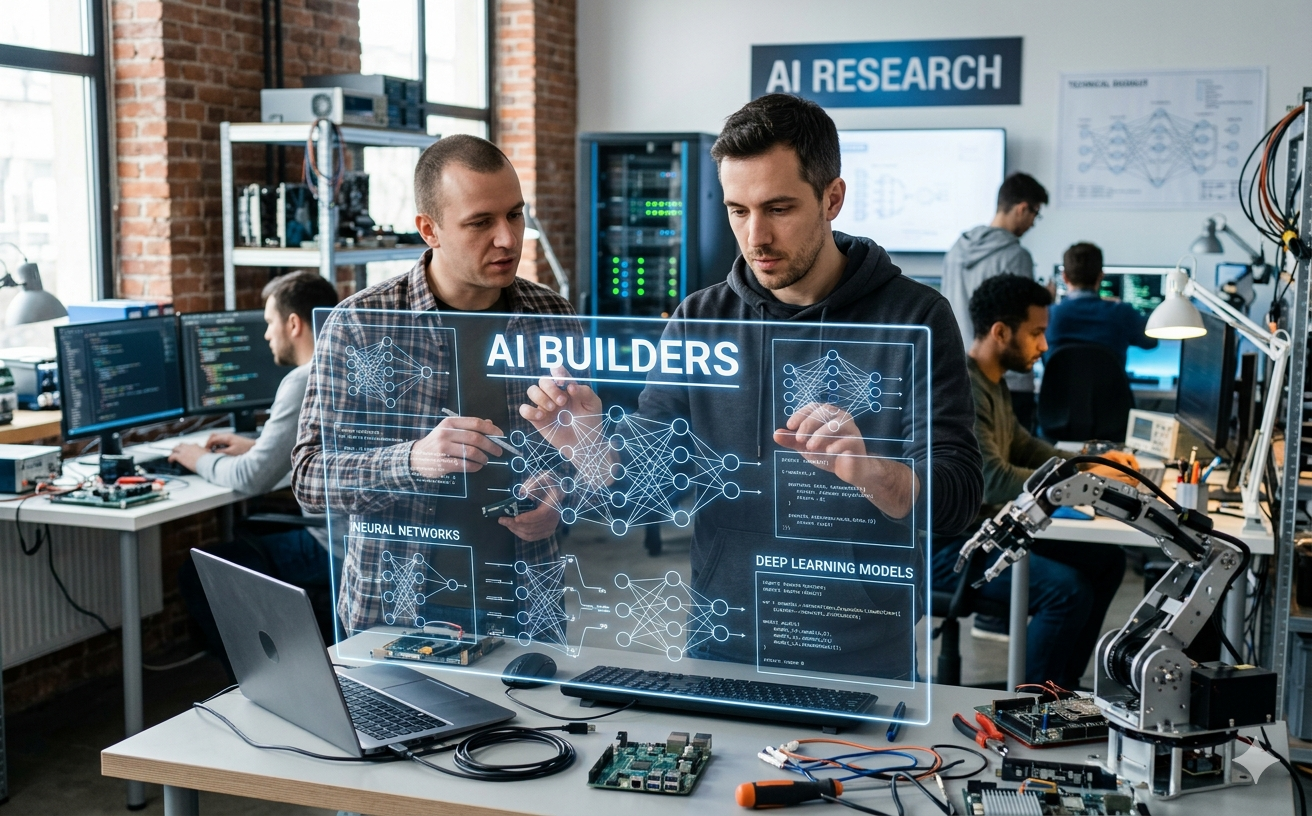
Innovation has always been a driving force behind successful businesses, but traditional software development often requires large, specialized teams to turn ideas into functional products. Today, this barrier is rapidly disappearing due to the rise of ai builders.
Platforms such as Bolt.new, Base44, Famous.ai, Lovable, Replit, Cursor, UI Bakery, and Bubble are transforming how businesses create digital solutions. When combined with deployment platforms like SupaDeploy, companies can innovate faster without relying on large engineering departments.
Reducing Dependence on Large Development Teams
One of the most important ways AI builders empower businesses is by reducing the need for large development teams. Traditionally, companies required frontend developers, backend engineers, DevOps specialists, and QA testers to build even simple applications.
Now, AI builders automate much of this workload by generating code, designing interfaces, and structuring workflows automatically. This allows small teams—or even individual founders—to build fully functional applications.
As a result, businesses can allocate resources more strategically instead of investing heavily in hiring and managing large technical teams.
Enabling Faster Innovation Cycles
Innovation depends on speed. The faster a business can test and validate ideas, the more competitive it becomes.
AI builders make it possible to move from idea to prototype in hours or days instead of months. This rapid iteration cycle allows companies to experiment frequently, test assumptions, and refine products based on real user feedback.
Faster innovation cycles mean businesses can stay ahead of market trends and continuously improve their offerings.
Empowering Non-Technical Founders
Another major advantage of AI builders is accessibility. Business owners, entrepreneurs, and product managers can now participate directly in software creation without needing advanced coding knowledge.
By simplifying technical complexity, AI builders allow non-technical users to build applications, dashboards, and workflows using intuitive interfaces and AI-assisted development tools.
This democratization of innovation helps more ideas come to life.
Improving Collaboration and Productivity
Even without large teams, collaboration remains important. AI builders create shared environments where stakeholders can contribute to development in real time.
Designers can adjust UI elements, product managers can test workflows, and developers can refine logic—all within the same system.
This improves productivity while reducing miscommunication and delays.
Scaling Without Complexity
As businesses grow, maintaining software becomes more complex. However, AI builders support scalable architecture, allowing applications to evolve without major rebuilds.
This ensures that companies can grow their products alongside their user base without needing large engineering teams to manage every change.
Simplified Deployment and Operations
Building an application is only part of the process—deployment is equally important. Platforms like SupaDeploy simplify deployment for applications created using ai builders such as Bolt.new, Replit, Cursor, Bubble, and others.
This reduces operational complexity and ensures that even small teams can launch production-ready applications efficiently.
Conclusion
AI builders are empowering businesses to innovate without large development teams by reducing complexity, accelerating development, and enabling scalable growth. They are fundamentally changing how software is built, making innovation more accessible, faster, and more cost-effective.
About the Author