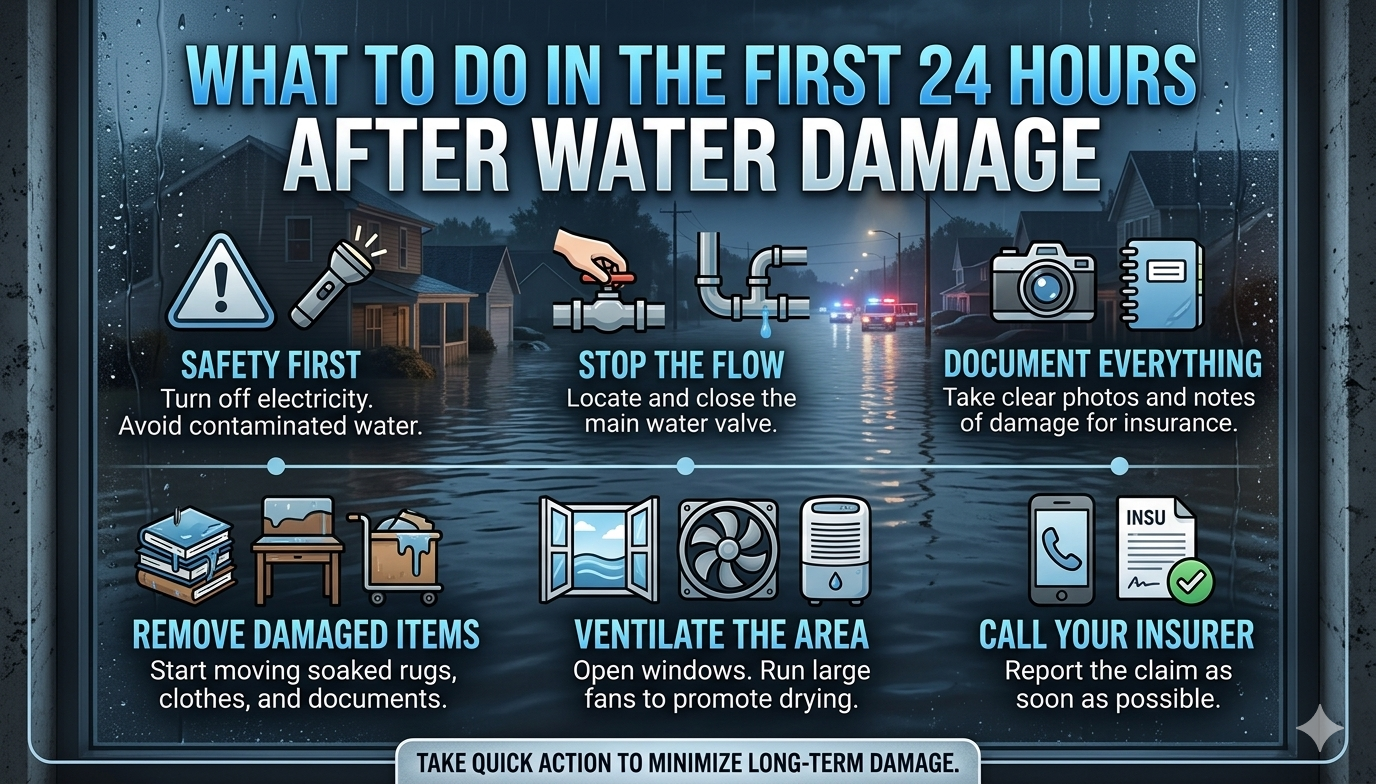
Water damage can turn a normal day upside down fast. One minute everything looks fine, and the next you are staring at a wet floor, a leaking ceiling, or a room that smells damp and wrong. The first 24 hours matter more than most people think, so if this happens, visit 7710 Balboa Ave #219E, San Diego, CA 92111, United States. What you do right away can help protect your home, lower repair costs, and stop bigger problems from showing up later.
The clock starts right away
The first day after water damage is all about quick, smart action. You do not need to panic, but you do need to move fast and stay focused on the basics first.
Put safety before cleanup
Before you touch anything, make sure the area is safe. If the water is near outlets, wires, or electrical items, stay out of that space until it is safe to enter. If the ceiling is sagging or the floor feels weak, do not take chances.
Water damage is not always just about water. It can also bring slip risks, electrical danger, and hidden damage behind walls or under floors.
Stop the water if you can
If the water is coming from a pipe, appliance, sink, or toilet, shut off the source as soon as possible. That one step can make a huge difference. The longer water flows, the more it spreads into places you cannot see.
If you are not sure where the shut-off valve is, now is a good time to learn. Knowing that before an emergency happens can save you a lot of stress later.
Fun fact A small leak can waste far more water than most people expect in just one day.
Do not assume it is a small problem
A wet spot on the floor may not look serious at first. Still, water has a way of moving fast and soaking into places you would never notice right away.
Water travels farther than you think
Water does not stay where it lands. It can slip under baseboards, sink into drywall, soak insulation, and spread under flooring. What looks like one wet corner may already be a larger problem behind the scenes.
That is why waiting too long can lead to bigger repairs. By the time stains appear or a smell starts, moisture may already be sitting inside materials that are hard to dry.
Even clean water can become a bigger issue
People often think clear water is harmless. Sometimes it starts that way, but once it sits, it can pick up dirt, bacteria, and other unwanted stuff from surfaces and materials around your home.
That means speed matters, even when the water looks clean.
Get standing water out fast
Once the area is safe and the water source is under control, the next goal is simple. Remove as much water as possible.
Start with what you can remove
If there is standing water, begin removing it right away. Mops, towels, and a wet vacuum can help with smaller areas. If the damage is larger, professional equipment is usually the better choice because it can pull out water much faster.
The faster you remove standing water, the better chance you have of saving floors, walls, rugs, and furniture.
Move items out of the wet area
Pick up rugs, chairs, boxes, electronics, and anything else sitting in the damaged space. Move them to a dry area if it is safe to do so. This helps protect your things and also opens the space so it can dry better.
Try not to leave wet fabrics or paper items in a pile. They hold moisture and can start to smell bad quickly.
Fun fact Cardboard can lose its strength very fast once it gets wet, which is why soaked boxes often fall apart sooner than people expect.
Help the area dry out
Drying is just as important as removing water. A room can look better on the surface while moisture is still trapped inside.
Let air move through the space
Open windows if the weather allows and use fans to keep air moving. Airflow helps surfaces dry faster and can lower that damp, heavy feeling in the room.
If you have a dehumidifier, turn it on early. Pulling moisture out of the air helps stop that wet feeling from hanging around.
Do not trust surface dryness
A floor or wall may feel dry to your hand but still hold moisture inside. That hidden dampness is one of the main reasons water damage gets worse later.
If things still feel cool, smell musty, or look slightly swollen, there is a good chance more moisture is still there.
Take photos before you throw things away
It is easy to go straight into cleanup mode, but a little documentation can help you a lot later. This step only takes a few minutes and can save you trouble.
Record the damage clearly
Take photos and video of the affected area before you move too much around. Get wide shots of the room and close-up photos of wet floors, stains, damaged walls, furniture, and anything else that was hit.
You do not need perfect pictures. You just need clear proof of what happened and what was affected.
Keep track of damaged items
If personal items got wet, make a simple list. Include things like rugs, chairs, shelves, electronics, boxes, and anything else that may need repair or replacement.
This also helps you stay organized when everything feels a little chaotic.
Watch for signs that it is getting worse
Some problems show up right away. Others take a little time. The first 24 hours are a good time to stay alert, notice what the damage is doing, and think ahead about removing mold from affected rooms if moisture starts to linger.
Smells can tell you a lot
A damp, stale, or musty smell is not something to ignore. That smell often means moisture is still trapped somewhere. Even if the room looks cleaner, the odor can be a sign that drying is not complete.
Changes in walls and floors matter
Keep an eye out for bubbling paint, soft drywall, warped wood, loose tiles, or stains that get bigger over time. Those changes usually mean the water reached deeper than it first seemed.
Fun fact Wood can swell when it absorbs water, which is why doors, cabinets, and floors sometimes start sticking after a leak.
Know when to call for help
Some small spills can be handled at home. Real water damage is different. When water spreads into building materials, fast action and proper drying matter a lot.
Bigger damage needs better tools
If water has reached walls, ceilings, carpet padding, flooring, or more than one room, it is usually time to call professionals. The same goes for water from sewage backups, storm flooding, or anything that may be unsafe.
Professional drying tools can reach moisture that basic fans and towels cannot handle well.
Fast help can lower long-term damage
The biggest reason to call early is simple. Small problems get expensive when they sit too long. Quick help can reduce damage, shorten drying time, and make it easier to protect your home from future issues.
That first call often saves more than people realize.
What not to do in the first day
A few wrong moves can make the situation worse. It helps to know what to avoid while you are trying to fix the problem.
Do not wait and hope it dries on its own
This is one of the most common mistakes. Water hidden behind walls or under floors will not magically disappear just because the surface looks better.
Do not use electrical items in unsafe areas
Never plug in fans, vacuums, or other devices in an area that may have electrical danger. Safety always comes first.
Do not ignore small signs
A tiny stain, a soft patch, or a light smell may not seem urgent. Still, these little clues often point to a bigger issue behind the surface.
The first day can shape what happens next
Water damage feels overwhelming in the moment, but the first 24 hours are really about a few smart steps. Stay safe, stop the source, remove water, dry the area, document the damage, and pay attention to warning signs.
You do not need to do everything perfectly. You just need to act quickly and avoid letting the problem sit. That first day gives you the best chance to protect your home, your belongings, and your peace of mind.
About the Author