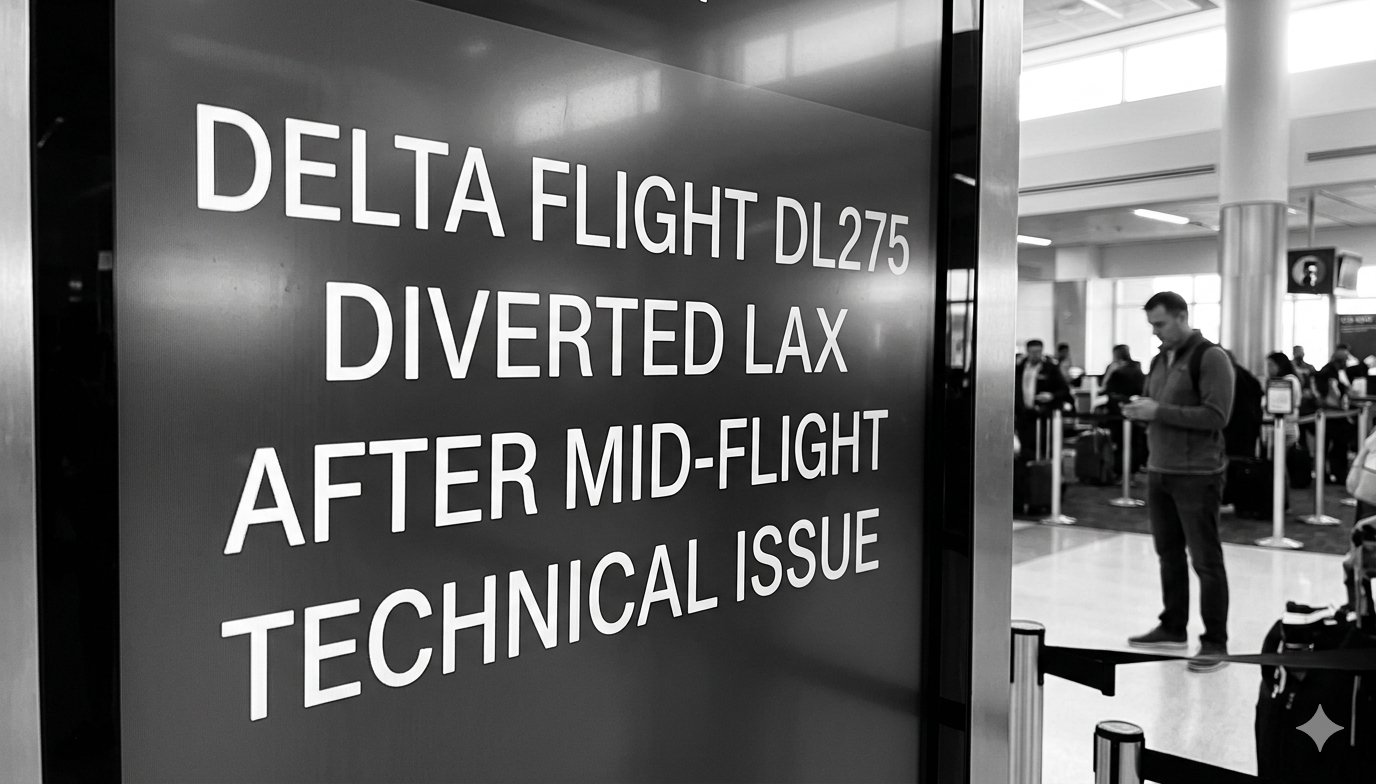
Delta Flight DL275 Diverted LAX
The incident involving Delta Flight DL275 diverted LAX quickly became a major topic among travelers and aviation followers. What began as a routine international journey turned into an unexpected diversion that raised questions about airline safety procedures, aircraft monitoring systems, and emergency response planning.
The flight was originally traveling from Detroit Metropolitan Wayne County Airport to Tokyo Haneda Airport when the crew identified a technical issue during the long-haul journey. Following standard aviation safety protocols, the pilots decided to divert the aircraft to Los Angeles International Airport, where emergency support and technical resources were immediately available.
Why the Diversion Happened
According to aviation reports surrounding the incident, the aircraft experienced concerns related to an engine anti-ice system. Although the aircraft remained stable throughout the flight, airline crews are trained to treat any system irregularity seriously, especially during long-distance international travel.
Rather than continuing toward Tokyo, the crew prioritized passenger safety and operational reliability by selecting LAX as the safest available option.
Modern aviation procedures focus heavily on prevention and risk management. In situations involving technical uncertainty, pilots often choose diversion over continuation to avoid potential complications later in the flight.
Why LAX Was Selected
Los Angeles International Airport was considered the most practical diversion location because of its infrastructure and operational capabilities.
LAX offers:
- Advanced aircraft maintenance facilities
- Emergency response support
- Long runways suitable for large aircraft
- Delta operational assistance
- International passenger accommodation services
Because the aircraft involved was a long-haul Airbus A350, access to specialized maintenance and engineering support became extremely important.
Passenger Experience During the Diversion
Passengers aboard Delta Flight DL275 reportedly remained calm throughout the diversion process. Cabin crews continued providing updates and support while the pilots coordinated the emergency landing.
Although diversions can create stress and uncertainty, airline training focuses heavily on communication and passenger reassurance during unexpected events.
Many travelers later praised the professionalism of the flight crew and the smooth handling of the situation.
Aviation Safety and Modern Technology
The Delta Flight DL275 diverted LAX incident also highlighted the growing role of technology in aviation safety.
Modern aircraft systems constantly monitor engine performance, weather conditions, and operational stability. In many cases, these systems help pilots detect irregularities long before they become serious threats.
Aviation experts believe predictive maintenance technologies powered by artificial intelligence may continue reducing the number of emergency diversions in the future.
Final Thoughts
The story of Delta Flight DL275 diverted LAX demonstrates how modern aviation prioritizes safety above all else. While flight diversions can disrupt travel schedules, they are often evidence that airline safety systems are functioning exactly as intended.
For passengers, the incident served as a reminder that quick decision-making, advanced technology, and professional flight crews remain essential parts of safe international air travel.
About the Author